
In 2005, I was a Project Manager at Pulte Homes. The cracks in the foundation of the housing industry had yet to appear and we were closing two homes every day.
Part of our positioning was an exceptional customer experience. Every step of the way was thoughtful, choreographed even.
This is how I came to loathe the singer Norah Jones.
Allow me to explain . . .
The final walkthrough with the homeowner—the main event preceding the closing where we would formally get paid for our efforts—was very specific.
The home was spotless.
A portable table was brought in.
Metal folding chairs were snapped into place.
The paperwork was organized just so.
And in the background, on a CD player the customer service rep schlepped around in their truck, was Norah Jones.
It was mandatory.
Norah had to be singing.
Along with some Febreze, she set the ambiance.
Why?
In a word, positioning.
We were trying to create an experience—not just hand over the keys.
Now, two decades later, one particular Norah Jones song still occupies real estate in my mind: What Am I to You?
It’s a relationship question.
It’s also a positioning question.
The Battle for Your Customer’s Mind
One of my favorite books of all time is Positioning: The Battle for Your Mind by Al Ries and Jack Trout.
Their central idea was simple: In a crowded market, the strongest brands occupy a specific position in the customer’s mind.
Two Examples from My Own Business
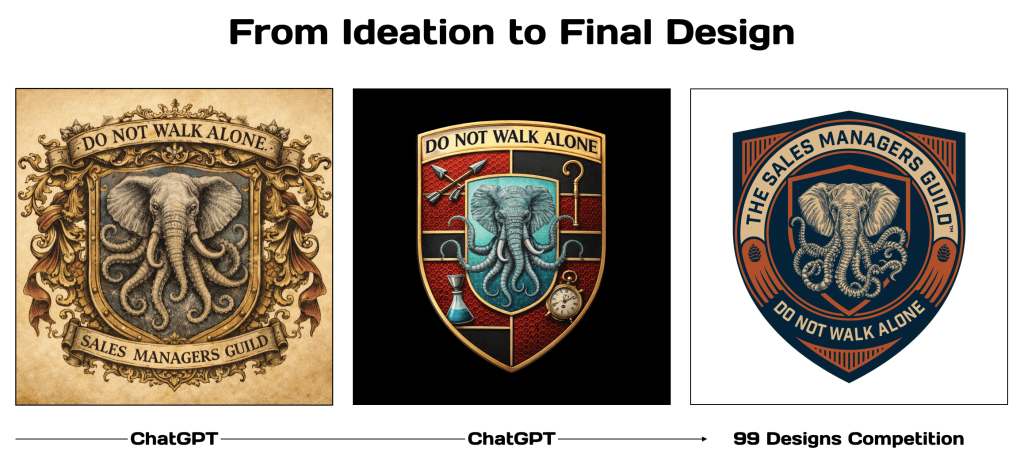
As we prepare to launch both the OSR Academy and The Sales Managers Guild, we’ve spent a great deal of time thinking about positioning.
The Academy develops salespeople.
The Guild develops sales managers.
Same philosophy.
Two points of entry.
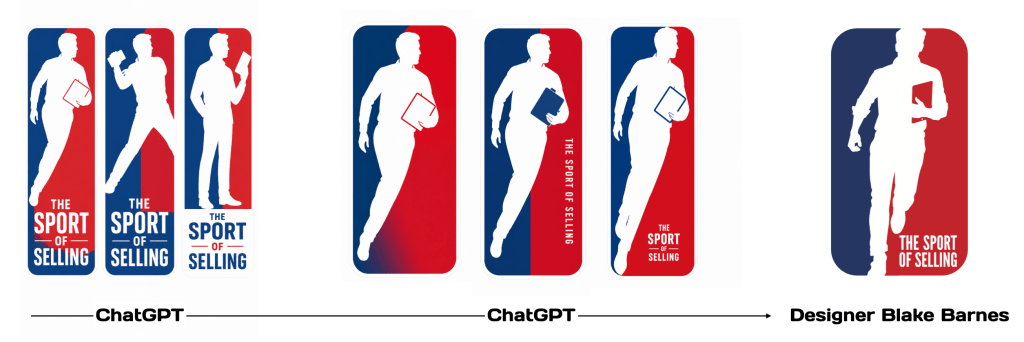
And because I’ve been pummeled with all the NBA Finals advertising (Go Spurs!), I felt inspired after a few cocktails this past weekend to play around with the idea of designing a logo for my Sport of Selling column in the pages of LBM Journal.
In both cases, positioning came first.
The logo came second.
The Sales Managers Guild is more than training.
It’s a community for sales leaders.
The mascot is an octophant—half octopus, half elephant. An impossible creature for what feels like an impossible job some days. You need the 8 arms of one and the memory of the other.
The Sport of Selling isn’t just another sales column.
It’s where sports lessons lead to sales insights.
The design simply helps communicate those ideas more clearly.
AI Changes the Speed, Quality, and Price
Artificial intelligence has dramatically lowered the cost of creating content, graphics, logos, and marketing materials—the tools to help you position yourself and your company.
The logo journey above is a perfect example.
What once required reaching out to a branding agency now start with a prompt.
ChatGPT generated early concepts.
A 99 Designs competition refined them.
Designer Blake Barnes finished the job.
But here’s what AI can’t do:
It can’t answer the most important question.
What am I to you?
AI can execute brilliantly once you’ve landed on your positioning.
It can’t—and shouldn’t—choose one for you.
That answer has to come from you.
Positioning People
The fundamentals expressed by Ries and Trout also apply to individuals.
In the LBM industry, I see John Powers building a reputation on Instagram. A.J. Mozingo is developing a distinctive voice on LinkedIn. Mark Weber is taking it to the next level by writing a book.
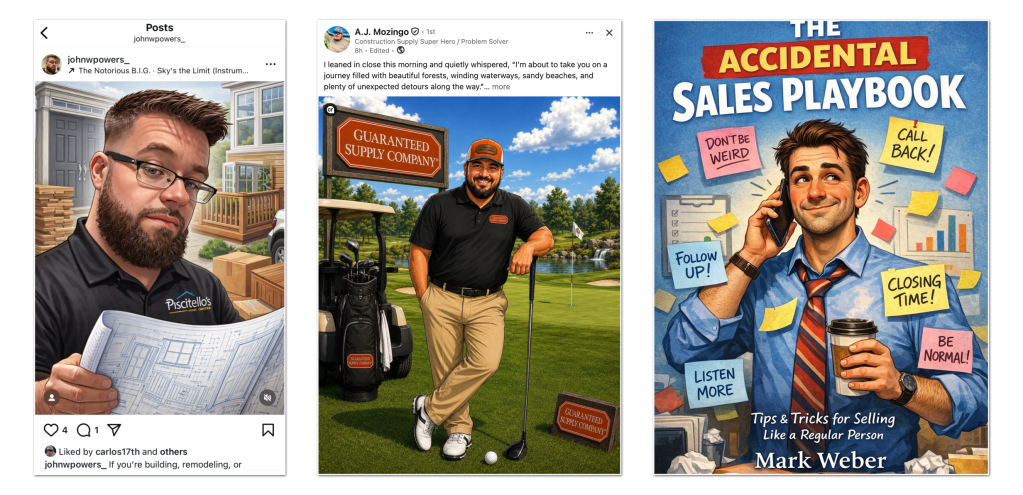
Different platforms.
Different voices.
Same objective: Occupying a specific place in the minds of the people they hope to serve.
Positioning and Branding: Thinking Beyond the Logo
Sales leaders often talk about the importance of qualifying prospects.
And that’s necessary, yet insufficient.
We also need to think about disqualifying prospects.
The best branding encourages the right customers to lean in while discouraging the wrong ones, helping them to opt-out.
Strong positioning creates clarity.
Here’s who we are and who, exactly, we help.
Because you don’t serve a market.
You serve individuals.
Each with their own needs, fears, and pains.
Each with plenty of opportunities to grow.
If you try selling to all of them, you’ll be memorable to none of them.
So, What Am I to You?
Whether you’re intentional about it or not, you’re shaping the answer to that question every single day.
Every call you make.
Every job site visit.
Every problem you solve before the customer even knows they’ve got one.
You walk away and your customer thinks, That’s my guy!
(And yes, ladies, you’re that guy too.)
That’s positioning.
Not a logo.
Not a tagline.
The way you make your customers feel.
Which brings me to why we’re launching two programs this year—and why we built them the way we did.
The OSR Academy is built around a simple belief: That standing out in a crowded market is a skill.
It can be taught.
It can be practiced.
And failing to plan = planning to fail.
The Academy is a 12-month program designed to help outside sales reps develop the skills, habits, and confidence to become the kind of rep customers don’t just buy from—they refer.
We’ve run this program for five years.
The results speak for themselves.
Seats are limited and enrollment closes soon.
The Sales Managers Guild is built around an equally simple belief: Great sales cultures don’t build themselves. They require leaders who know how to coach. Who know how to hold people accountable without crushing their confidence.
Sales leaders who can build a pipeline without inducing panic.
The Guild is for sales managers who are ready to stop walking alone.
Whether you have a rep in the Academy or not—if you lead a sales team in the LBM industry, this program was built for you.
Two programs.
One belief.
Great salespeople don’t happen by accident.
Neither do great sales leaders.
What are you to your customers?
Start building that answer—intentionally—today.
Thanks for reading.
I’ll see you back here next week.

| If you’re trying to create more accountability in your sales organization, the answer probably isn’t another report. It’s better visibility, better coaching, and better conversations. Watch this webinar to see how GenetiQ helps make that happen. |
Copyright © 2026
Bradley Hartmann & Co.
All rights reserved.
Contact Bradley Hartmann:
bradley@bradleyhartmannandco.com
 The Craft of LBM Sales