
Know someone who’d enjoy The Craft of LBM Sales Newsletter?
Forward this to them so they can subscribe here—and never miss a Thursday edition packed with practical sales insights.

The recent structural changes to the LBM industry started with Home Depot.
In March 2024, Home Depot announced its acquisition of SRS.
One year later, QXO became real through its acquisition of Beacon Roofing Supply.
Hours after that, James Hardie announced it was buying AZEK.
In February 2026, QXO swallowed Kodiak.
Two months later, TopBuild.
On July 13, Trex announced its new national distribution strategy with Specialty Building Products.
Then, this week, James Hardie/AZEK countered by naming Boise Cascade its “sole nationwide distributor.” (Hardie also expanded relationships with Lumbermen’s, Parksite, Woodgrain, and others—challenging the definition of the word sole.)
As I process all this change, I keep coming back to something much smaller.
Nick Schiffer of NS Builders is running sponsored ads for Home Depot.
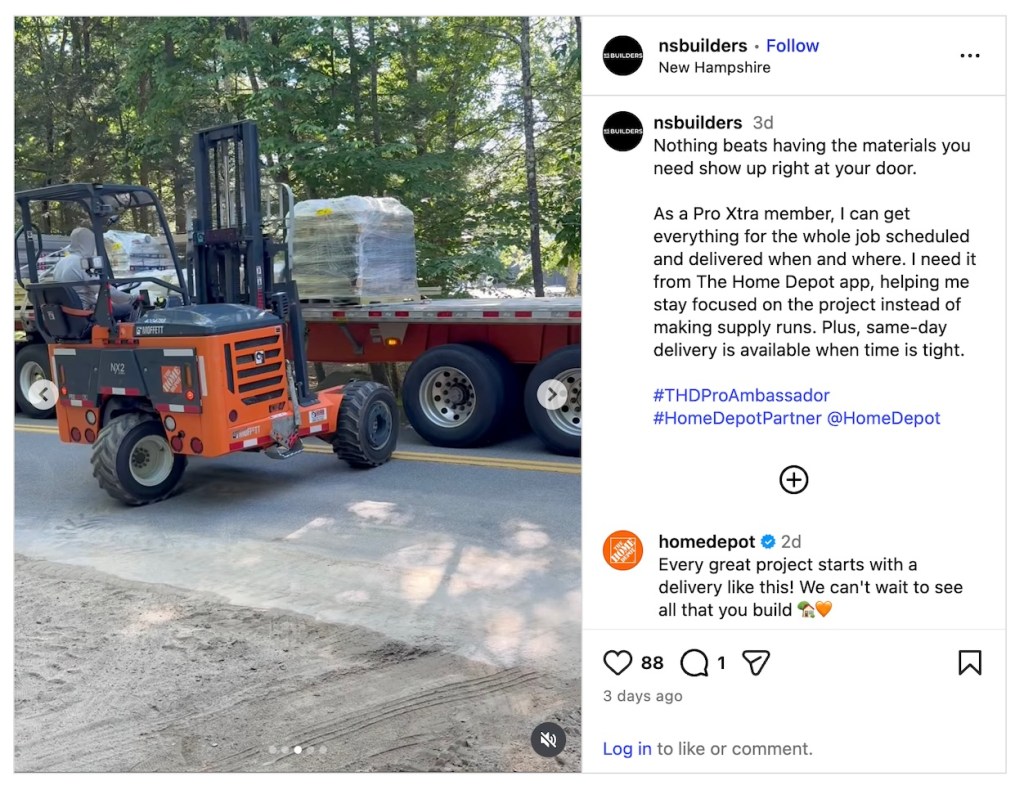
Schiffer builds luxury homes around Boston. He has nearly a quarter-million Instagram followers, tens of thousands of YouTube subscribers, and co-hosts the Modern Craftsmanpodcast.
The headline on his website features the word bespoke.
That’s code for really expensive.
So why is he promoting Home Depot?
I mean, beyond the easy money.
Because these brands don’t go together.
You don’t see a Bugatti parked at Walmart.
This has been my operating assumption: Every 4-5 years Home Depot makes another run at the pro contractor. They hire outside sales reps away from local dealers, sprinkle a few contractor-focused commercials into their college football advertising, and then, two years later, shut it all down and focus on more commercials with Shaq.
But what if this time is different?
What if Home Depot buys US LBM?
Three years ago, I wouldn’t have entertained the question.
But our industry is changing in ways that suggest our perceptions deserve another look.
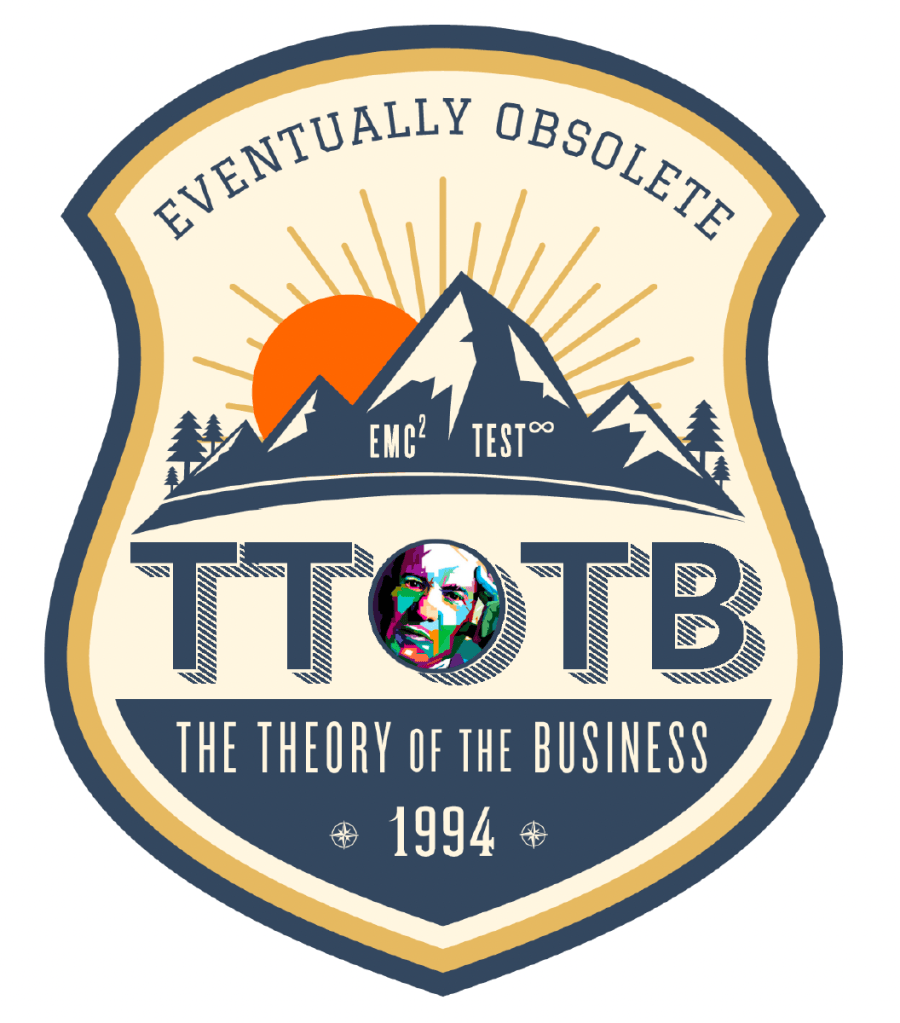
Legendary business thinker Peter Drucker argued that every business operates on a Theory of the Business—a collection of assumptions about customers, competitors, suppliers, and what drives profits.
His punchline was that, on a long enough timeline, every theory of the business becomes invalid.
Some theories of the business are durable.
They can last decades.
General Motors had a 70-year run.
Intel’s lasted 50 years.
But assumptions expire.
No company—yours, mine, or anyone else’s—is entitled to its business model simply because it’s worked in the past.
That’s a fight.
And most companies lose it from the inside.
While reading Military Misfortunes, I came across a relevant framework. The authors argue that organizations struggle for one of three reasons:
- Failure to learn from the past
- Failure to anticipate the future
- Failure to adapt in the present
How can this apply to us today?
Learn from the past.
Read past the headlines and ask what assumptions of yours they challenge.
What did the Hardie/AZEK deal teach us?
What did Trex’s distribution strategy reveal?
What do these moves suggest about where manufacturers, distributors, and customers believe value is headed next?
Anticipate the future.
While leaders are not expected to divine the future (Although some can—the Steelers will have their first losing season since 2003), they are responsible for ensuring their organizations are positioned to thrive in an uncertain future.
That starts with questioning.
What would you do if you woke up tomorrow and 30% of your revenue disappeared?
What if your largest customer aligned with your biggest competitor?
What if a local adjacent business you’ve never considered a threat suddenly became one?
Think through these scenarios now, and you can shrink the gap between surprise and response.
Adapt in the present.
One common question I ask clients when developing sales strategy is this: Where’s the evidence?
If you’ve been students of the LBM industry, where are your insights documented?
If you’re anticipating further change, where are the scenarios you’ve imagined and discussed?
If you’re in the habit of challenging your own assumptions, where are they written down?
If the answer is, “Well, we always talk about this stuff in our meetings,” that’s probably not enough.
Market leaders challenge yesterday’s assumptions before the market forces them to.
The headlines you’ve been reading are hints.
Hints that maybe, despite your success over the last 100 years, what’s coming next will disrupt it.
These headlines are also reminders that no one is entitled to a durable theory of the business.
After you read about the next Brad Jacobs acquisition, ask: What assumption of mine does this challenge?
Then write the answer down.
Bring it to your next sales meeting.
And keep looking.
Because the press release about the next billion-dollar move may bury something more important.
Like a bespoke builder from Boston running ads for Home Depot.
Thanks for reading.
I’ll see you back here next week.
The only podcast built for LBM sales leaders and reps.
The Craft of LBM Sales Podcast delivers practical sales coaching you can use immediately—anytime, anywhere.
Subscribe here:
Apple Podcasts | Spotify
Copyright © 2026
Bradley Hartmann & Co.
All rights reserved.
Contact Bradley Hartmann:
bradley@bradleyhartmannandco.com

