
Know someone who’d enjoy The Craft of LBM Sales Newsletter?
Forward this to them so they can subscribe here—and never miss a Thursday edition packed with practical sales insights.

Builders don’t wake up thinking about products.
They wake up thinking about their permits, weather delays, irate customers, and the flukey electrician showing up on time.
I remembered all of it—from my 11 years working as a superintendent and project manager—as I sat down with six builders over the last 45 days.
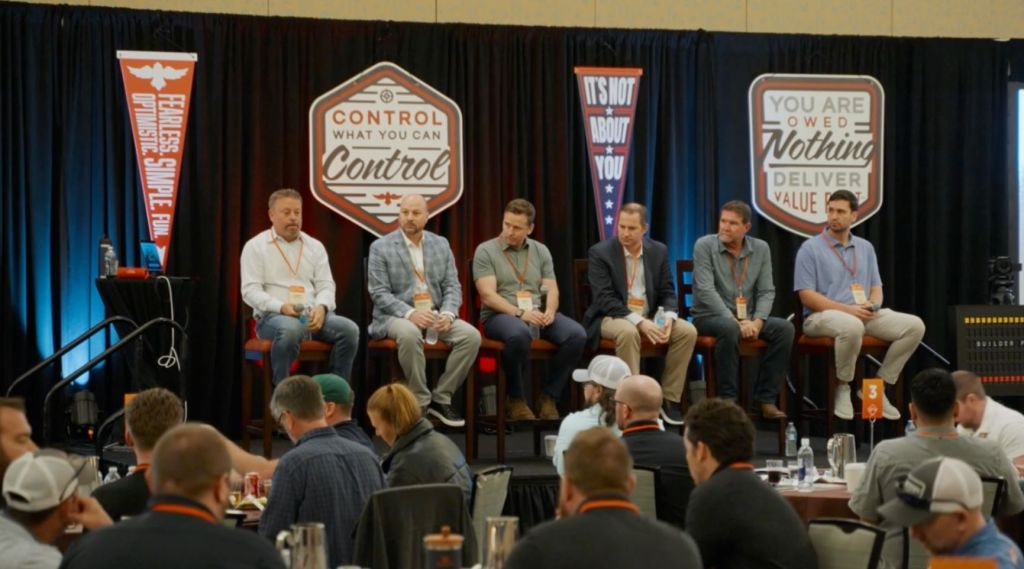
Five builders joined us for our annual Sales Fundamentals Workshop. (You can hear the panel conversation on The Craft of LBM Sales Podcast: Part I is episode 72 and Part II is episode 73.) A sixth builder joined our OSR Academy for a candid Q&A session.
The consistent theme across all six conversations: Too many reps show up thinking about their product. Not nearly enough show up thinking about the project.
1. They show up prepared.
Nothing irritates a builder faster than feeling like they are educating the salesperson.
Adam Lingenfelter spent 20 years as a sales leader with an LBM dealer before launching Lingenfelter Luxury Homes. His annoyance was palpable when he described his reaction to a rep’s interest in “fact-finding” during an initial meeting.
“I don’t want to hear ‘We’re here to learn more about you and fact-find’ and whatever. Basically, what I got out of the meeting is . . . what? Our next meeting will be the fruitful one?”
We always say this is a relationship business.
Well, this is where the relationship starts.
And relationships aren’t efficient.
Thoughtful preparation accelerates the conversation toward something useful—while signaling that you actually care.
2. Value creates rapport. Not the other way around.
Salespeople instinctively attempt to build rapport at the outset.
It’s a smart move, generally.
Our panel offered a different perspective.
Austin Reichert of ACM Millwork put it plainly: “Come in, solve a problem, give me time back—that’s where the rapport starts. This one product is a very small percentage of my problems sitting on my desk that day.”
Commenting on the weather won’t get you there.
Your ten-minute analysis on the Myles Garrett trade won’t either.
Andrew Cooper of Toll Brothers confirmed that: “Sports and weather are the easy button.”
If you really want to build rapport, do it before you get into the room.
Cooper had an example. He’s kept a handwritten letter from a sales rep in his desk drawer for three years. Not because the rep was charming—because the rep had done enough homework to reference a once-in-a-lifetime hunting trip Andrew had taken.
That’s preparation.
3. They bring options and alternatives, not just quotes.
Dustin Dewald, a custom builder in central Texas, admitted to being blown away when reps offered to help him market the spec homes he’d had sitting on the market for months.
“I never thought about talking to my dealer about it. I didn’t even know it was an option. I thought I was alone on that front.”
Builders often don’t know what they don’t know—but they know they want more than a pricing and availability quote machine.
They want a project partner who thinks about the budget, the timeline, and the homeowner sitting across the table. Then they attempt to bring something useful before being asked.
4. They communicate early—especially when the news is bad.
Nobody enjoys price increases or delays.
What builders said repeatedly, however, is that surprises are far worse than bad news.
Adam Lingenfelter put a number on it: “Maybe 10% of our subs or vendors give us advance notice. The vast majority won’t—and that seems like a really important part of a relationship.”
Bad news delivered early creates options.
Bad news delivered late creates problems.
The reps who initiate uncomfortable conversations are the ones who get called first when something goes right too.
5. They prevent problems before they happen.
One example shared: A dealer sales rep ordered windows off the prints.
Double-checked everything.
Builder admitted to signing off.
Visiting the site on Day 1 of framing, the sales rep spotted an issue—one window was only 18 inches off the floor, requiring tempered glass.
Not what was on the prints.
Not what was ordered.
The rep didn’t freak out and call the construction manager—just throwing the problem over the fence, as one builder put it.
Nope, the rep called the window manufacturer, updated the configurator, and cajoled his way into ensuring the new window would be delivered on time and in full along with rest of the load.
Then he called the builder and let them know the problem and its solution.
That’s not a rep slinging product. That’s a project partner looking around corners for the inevitable screw-up.
The result, according to the builder?
“That’s why we buy from him. It really doesn’t matter what the price is.”
Every morning, your builders wake up staring down a list of problems that have nothing to do with your product catalog.
Yes, price matters.
These six builders were clear about that.
You need to be in the ballpark.
But the reps who build lasting relationships aren’t the ones with the best price.
They’re the ones who show up already thinking about the project—and occasionally solving problems before the builder even knew they existed.
Show up for the project.
The product will follow.
Thanks for reading.
I’ll see you back here next week.

| P.S. Registration for OSR Academy Cohort V opens next week. The OSR Academy includes 12 months of sales training for LBM sales reps—including our Sales Fundamentals Workshop and monthly live training sessions with builders like the ones featured in today’s newsletter—giving your team direct access to the people they sell to every day. |

| GenetiQ, the next evolution of ERP – discover how industry experts Gary Brookshaw and Bradley Hartmann help sales teams sell smarter, coach better, and grow faster. Watch the conversation. |
Copyright © 2026
Bradley Hartmann & Co.
All rights reserved.

Contact Bradley Hartmann:
bradley@bradleyhartmannandco.com

