
| Know someone who’d enjoy The Craft of LBM Sales Newsletter? Forward this to them so they can subscribe here—and never miss a Thursday edition packed with practical sales insights. |

I can tell you one thing about college football recruiting: They don’t tell you you’re going to be the fifth-string quarterback. Had that little tidbit been shared with me, I would not have been sold on attending Eastern Illinois University in the fall of 1996.
I arrived on the Charleston campus as a 6-foot-3, 163-pound “pocket passer”—code for decent arm, can’t run. As for my stick-figure frame, my offensive coordinator (OC) said, “You better fall in love with eating and lifting.”
I got to work—and got lucky. The fourth-string QB chose marijuana over football. The third-stringer ate and lifted his way into a tight end. Then the backup got hurt. Suddenly, I was the backup.
I got my chance against Middle Tennessee State. We were up big. “Keep the clock running and don’t embarrass me,” my OC said. I threw exactly one pass. On that one pass, I broke exactly one bone in my wrist.
A few weeks later, I hosted a no-star recruit from Wisconsin. Like an idiot, I made sure he had a wonderful time. His name was Tony Romo. He came. I left. And that was the end of my college football career. However, the lessons I learned on the gridiron still shape how I think about selling today.
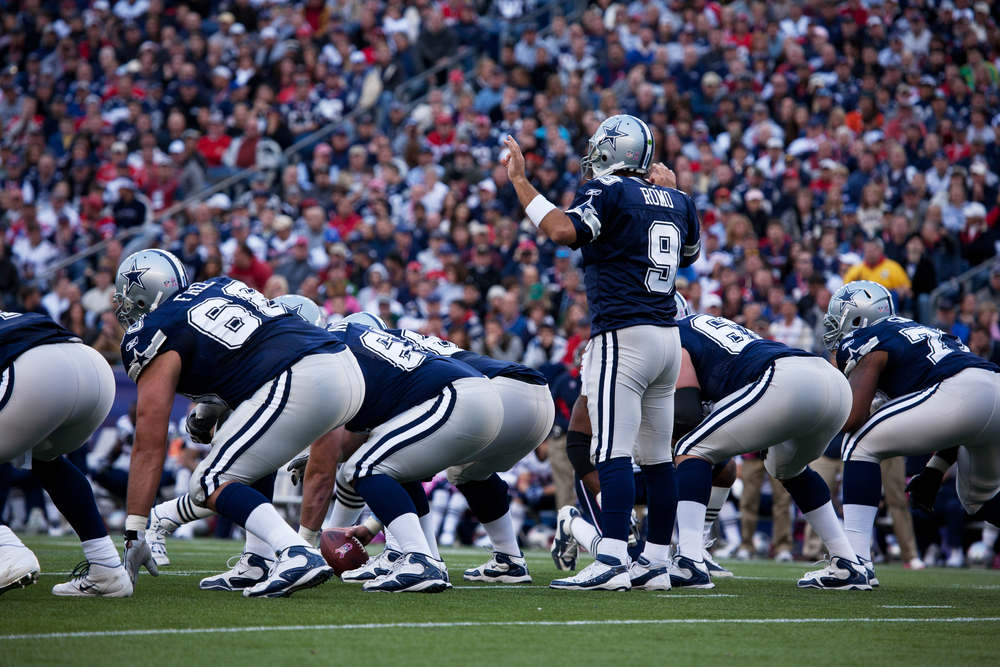
Constantly monitor the depth chart.
Inside our locker room was a whiteboard with every player’s name on a small magnet, organized by position. The magnets were designed to move easily. And they did. Often daily.
Sales reps need a depth chart, too. Force-rank customers into A, B and C accounts. Not all customers are created equal, and you can’t be everywhere for everyone at all times.
Same concept applies to prospects. Which prospects could fundamentally change your business? Which prospect has received five consecutive free takeoffs without awarding you any new business? A depth chart tells you where to invest your most precious resource: your time.
Study the game.
A quarterback needs to know what all 10 teammates are supposed to do on every snap—and anticipate what the 11 defenders will do in response. At EIU, we watched 90 minutes of film every day. Preparing for Murray State my sophomore year, we once watched 30 straight minutes of their middle linebacker dropping into coverage.
Great LBM salespeople think similarly. Beyond products, pricing and availability, they study—expanding their business acumen beyond gross margin into cost-to-serve models and net profitability by customer.
It seems obvious to say “You gotta know your opponent,” but ask a sales rep about their biggest prospect—who they’re competing against, each company’s strengths and weaknesses—and you may get a blank look.
Don’t tell me your edge is “getting last look.” As a former purchasing manager, I can tell you what that really means: One more call to my preferred partner for a lower price.
So, study your own business—and your opponent. You can’t attack weaknesses you haven’t identified.
Confused players can’t play fast.
Quarterbacks drill progressions relentlessly: Deep to shallow, first read, second, third, then dump it to the back in the flat. Trying to process all that during a sevenstep drop behind 6-foot-5 offensive linemen as defensive ends try to rip your head off isn’t realistic.
Preparation creates pattern recognition, which allows you to stop thinking and just play. Sales is no different. If you don’t have a specific game plan for your calendar, your customers and colleagues will gladly plan it for you. Identify the top five results for the week and each day’s #1 priority. Because once the day starts, all hell breaks loose. You won’t rise to the occasion. You’ll fall to the level of your preparation.
Pressure is a privilege.
It took me months to understand why my OC went from soft-spoken and sweet during my recruitment to stressed-out and salty on campus.
After tossing an interception in practice, he grabbed my facemask. “This just a game to you? Huh? Big man on campus. Pep rallies, girls, whatever,” he said. “Not to me. If we don’t win, I’m fired. Gotta tell my wife we’re moving. Again. Gotta find a new house. New schools for my kids. You get that?”
I hadn’t. A quarterback’s job is driving the offense and scoring points. A salesperson’s job is delivering value and winning new business. If reps aren’t actively pursuing it, nobody is. That should feel like pressure and a privilege.
I felt it at Eastern Illinois, and I still feel it selling today. I live in Dallas, about 15 miles from Tony Romo. When the pressure gets to me, I remind myself that Tony and I still have exactly the same number of Super Bowl rings.
Thanks for reading.
I’ll see you back here next week.


The only podcast built for LBM sales leaders and reps.
The Craft of LBM Sales Podcast delivers practical sales coaching you can use immediately—anytime, anywhere.
Subscribe here:
Apple Podcasts | Spotify
Copyright © 2026
Bradley Hartmann & Co.
All rights reserved.

Contact Bradley Hartmann:
bradley@bradleyhartmannandco.com

