

I’m a little slow.
It took me way too long to understand why builders don’t tell suppliers the real reason they lost the business.
Flashback to October 2010.
I was in area purchasing at Pulte Homes, managing a few dozen material and labor accounts across seven markets from Cleveland to Denver.
Home starts were down 80 percent nationally.
It was grim.
I took a meeting with a Chicagoland millwork supplier on a new community going out to bid. Two guys showed up—a member of the Old Guard and a Young Gun—and the meeting got off to a rough start.
It went downhill from there.
Fast forward six weeks and this duo was in my office after having “just been in the area.”
I informed them they did not win the business.
“Can I ask a favor?” the Old Guard said. “Just level with us. Shoot us straight. What didn’t we do? Because I really thought we did everything here to earn this durn business.”
I sighed.
A crossroads.
Should I be candid?
Fully transparent?
Tell them exactly how I felt?
In that moment, I had a choice to make.
I chose poorly.
“Fine,” I said. “At our first meeting, you showed up fifteen minutes late after tracking mud into the elevator—and then all over our conference room. I asked three different ways how you were better or different than your competition, and you kept saying, ‘You’ll just have to try us and see.’ Then the Excel file I sent over came back with busted formulas, and your pricing was fifth highest out of six.”
Wide-eyed and a bit startled, these two looked at me like they’d just watched a bird fly into a sliding glass door.
And then the Young Gun started pushing back.
Point by point.
Excuses for the tardiness.
Explanations for the mud.
Then he stopped.
“Now, tell me again: What was the third one?”
That’s when I realized my mistake: They didn’t actually want the truth.
And my motive may have been more about trying to be right. If I was really trying to help these two, would this be the way to do it?
Or was my feedback more like, Okay buster, you asked for it!
I cut the meeting short and left.
Now, if they told this story over a few Miller High Lifes about the biggest purchasing jerk they ever met, I’m not sure I’d argue with them.
But this is why so many purchasing managers and owners default to the most expedient and least contentious explanation: “Your price was too high, but I appreciate you bidding. I’ll keep you in mind for the next project.”
Straightforward.
Simple.
Nice.
It’s a clean, painless story a sales rep can take back to their boss when asked why they lost the business.
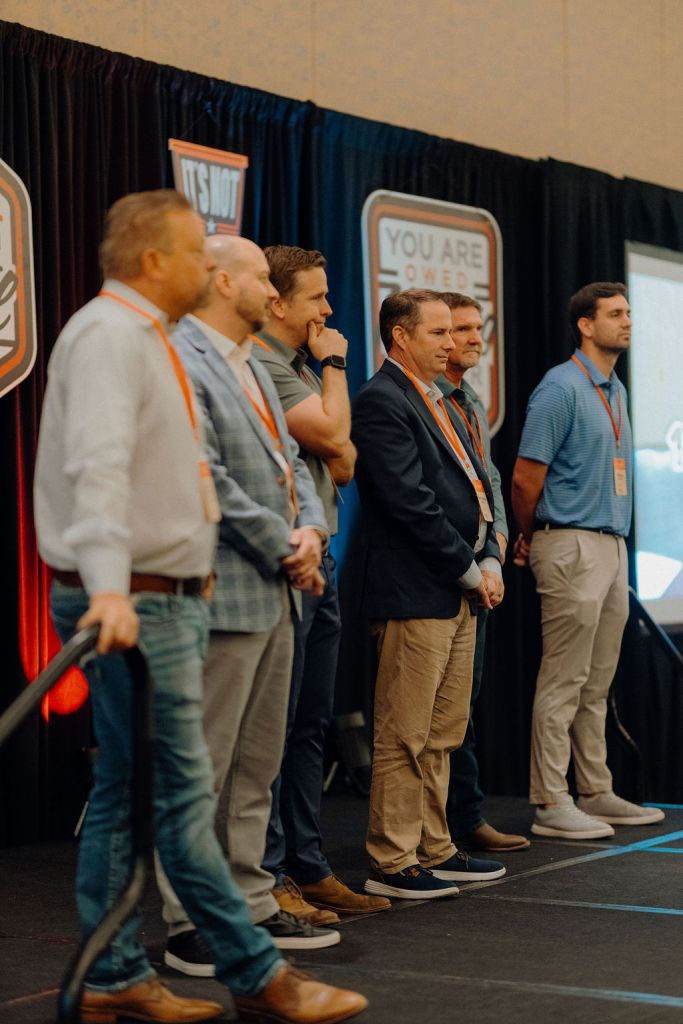
That meeting came back to me last week as we hosted our 7th annual Sales Fundamentals Workshop in Fort Worth. Five builders joined us from across the country to share insights on what the best sales reps do—and what they shouldn’t do.
During the panel discussion, Adam Lingenfelter of Lingenfelter Luxury Homes said it plainly:
“Probably the worst thing you could do is just not care enough to really be prepared. Don’t waste my time. I’m way too busy to have meetings for no reason. I don’t want to hear, ‘We’re here to learn more about you, do some fact-finding…’ So what I got out of this meeting is that our next meeting will be the fruitful one? This one’s just about you? Definitely don’t do that. Care enough to do the work to come prepared to make the best use of our time.”
When builders talk about the best sales reps—the ones they’re willing to pay more for, the ones they don’t shop on price—they rarely mention MBA-level insights or some next-gen innovation.
It’s the little things.
Done consistently.
Every time.
Show up on time.
Prepared.
With an agenda.
And something to write with.
Don’t show up unannounced at the office.
Do show up unannounced at the job site.
When things go wrong—and they always do—apologize and fix it. Fast.
Then follow up with everyone around the issue to confirm it’s solved.
Be useful.
Look around: There are needs, fears, frustrations, and opportunities everywhere.
And whatever you do, don’t track mud into a prospect’s office.
Now, take a peek at your calendar over the next week.
Which prospect meetings do you have scheduled?
Before you walk in, ask yourself:
- Am I prepared—or just showing up?
- Do I have an agenda—or just “some things to go over”?
- Am I here to be useful—or just to be seen?
Because your prospect will feel the difference.
But they’ll probably never tell you.
Thanks for reading.
I’ll see you back here next week.

Subscribe here to get the next edition of The Craft of LBM Sales straight to your inbox—weekly stories and practical advice to master the craft of selling.

The only podcast built for LBM sales leaders and reps.
The Craft of LBM Sales Podcast delivers practical sales coaching you can use immediately—anytime, anywhere.
Subscribe here:
Apple Podcasts | Spotify
Copyright © 2026
Bradley Hartmann & Co.
All rights reserved.

Contact Bradley Hartmann:
bradley@bradleyhartmannandco.com
 The Craft of LBM Sales