
Know someone who’d enjoy The Craft of LBM Sales Newsletter?
Forward this to them so they can subscribe here—and never miss a Thursday edition packed with practical sales insights.

After the fourth bubble mailer arrived in two days with an eBay logo, my wife was forced to ask. “Do I need to be concerned with this?”
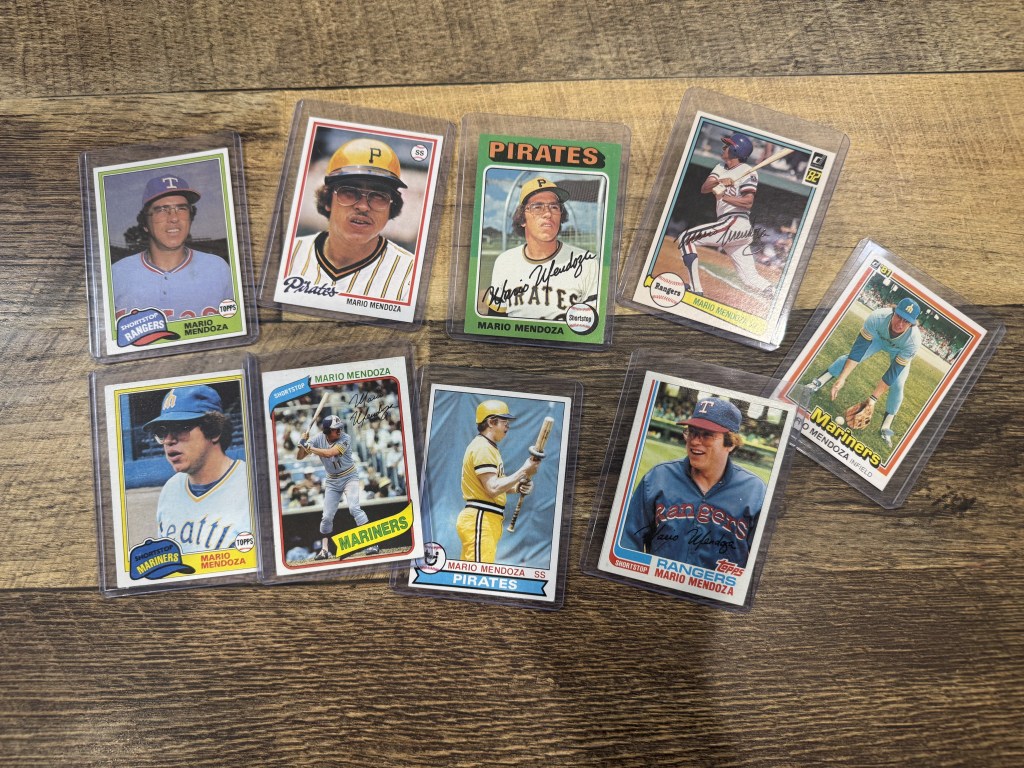
No, I told her. I had tracked down—and acquired—the eight Topps baseball cards representing the career of Mario Mendoza. Naturally, it took her a moment to process all that.
“How much did you spend?”
When I told her less than $19 in total, she squinted at me. Then she shook her head in that adorable way that conveys both “I don’t even want to know,” and “I may have married poorly,” in one glance.
If you were to collect eight Mario Mendoza baseball cards, you’d notice the squinting. He’s wearing these giant Mr. Magoo glasses whose lenses are measured in square feet. It looks like he’s trying to pick up the spin on the curveball—from the upper deck of Three Rivers Stadium.
It’s obvious vision wasn’t his strong suit. His stats back it up: Mendoza batted under .200 five times in his career. Mendoza was a gifted defensive shortstop—quick feet, sure glove, and a strong arm that consistently turned hits into outs.
His teammates loved him. In the clubhouse, they teased Mendoza about his offensive futility. But soon the “Mendoza Line” went viral. Someone mentioned it to Hall of Famer George Brett during a slump. He then repeated it to ESPN’s Chris Berman who never heard a nickname he didn’t like.
The Mendoza Line—a batting average of .200—became an instant and enduring metric. Dip below it and you’re headed to Triple-A. Or traded for a dozen batting practice balls and some pine tar. Or simply cut.
Every baseball fan knows: You’ve got to stay above the Mendoza Line.
What’s the Mendoza Line in LBM sales?
Every sales team tracks revenue and margin, but few define the minimum acceptable threshold for net new business development. And that’s a problem.
Without a line, there’s no standard. Without a standard, there’s no accountability. And without accountability, you may just have a starting lineup full of account managers calling themselves salespeople. And if your salespeople aren’t selling, well, who is?
The Mendoza Line for net new business in LBM sales is 10 percent.
If a rep sells $400,000 next month, a minimum of $40,000 should come from net new business. That means from selling existing customers new product categories and converting non-customers to customers.
And ten percent isn’t heroic. It’s not George Brett chasing .400. It’s batting .200—the minimum level of offensive performance required to stay in the lineup. And most reps aren’t there. One client has 37 OSRs with only 11 above the line. Another has 52 reps with only 13 above it. Some leaders will be tempted to suggest the line is too high.
Don’t do that.
If less than 10 percent of a sales rep’s revenue is genuinely new, they’re not selling. They’re not putting themselves in the path to hear the word no. What they’re probably doing is managing accounts and handling customer service. Yes, that work has value, but it’s not selling.
How can you lead this change?
First, start with current customers. Every rep has existing customers who love them—yet also buy from the competition. Which product categories should they be buying from you? A warm relationship is the shortest path to new revenue. Pick up the phone. Ask for what you want.
Second, get explicit about targets. Name the prospects. Your competitor’s biggest customers in your market—who are they? Build them into your pipeline. Review it every week. Sales managers: Ask a rep why nothing has advanced on the top prospect this week. Then wait.
Both steps require discipline and a leader willing to make the expectation public.
Which brings us back to the line.
Here’s the part of the Mendoza story that doesn’t get enough attention: Yes, Mario Mendoza did bat below his namesake multiple times, but his career batting average wasn’t .200. It was .215.
Over one thousand at-bats across nine seasons, the man whose name defines ineptitude at the plate finished well above the line that bears his name. Meanwhile, another shortstop named Jim Mason—same era, similar career length, nearly identical at-bat totals—finished at .203.
But you’ve never heard of the Mason Line. Because Jim Mason was just another guy. Mario Mendoza became the metric.
But this isn’t about Mendoza. It’s about that metric and the clarity it brings. It’s a number that sets the standard. It’s a stat with a good story that belies a cold truth: If you’re in the starting lineup and you’re not generating offense, you’ll be replaced.
Sales leaders: The Mendoza Line for net new business is 10 percent. Make it public and coach to it.
Sales reps: Stay above it, and you’re in the game. Drop below it, and it’s time to adjust your swing.
Thanks for reading.
I’ll see you back here next week.


| Somewhere between your quote and the invoice, your margin went missing. Click here to see where it’s happening. |

The only podcast built for LBM sales leaders and reps.
The Craft of LBM Sales Podcast delivers practical sales coaching you can use immediately—anytime, anywhere.
Subscribe here:
Apple Podcasts | Spotify
Copyright © 2026
Bradley Hartmann & Co.
All rights reserved.

Contact Bradley Hartmann:
bradley@bradleyhartmannandco.com

