

The Hartmanns of Elgin, Illinois were not a camping clan.
That changed exactly once—May 25th, 1988—when my father came home and announced, “There’s a tent in the back of the van. Drag it into the backyard. We’re sleeping outside tonight.”
My brother, sister, and I sprinted to the driveway.
For non-camping kids like us, this was a miracle.
What we found looked like the carcass of a dead moose wrapped in army-green fur.
Then the smell hit me.
Ooof. Was this tuberculosis?
It was mold, my dad explained, and maybe something else.
We dragged the beast into the late afternoon 90-degree heat. My dad dispatched my brother for bleach. One hundred ounces of Clorox later, I missed the mold.
The giant zippers skinned my fingers.
The humidity was suffocating.
We unzipped the front flap, a dinner bell for a mosquito battalion.
At some point, my father disappeared into the house and never returned.
As soon as the sun set, we followed.
That was the beginning—and the end—of my camping career.
Which is why I’ve been surprised by my new obsession: Aloneon Netflix.
The premise is as simple as it is horrifying.
Ten contestants are dropped 125 miles into the Canadian wilderness, inside the Arctic Circle. They each select ten survival items, lug 65 pounds of camera gear, and film themselves.
The last person standing wins.
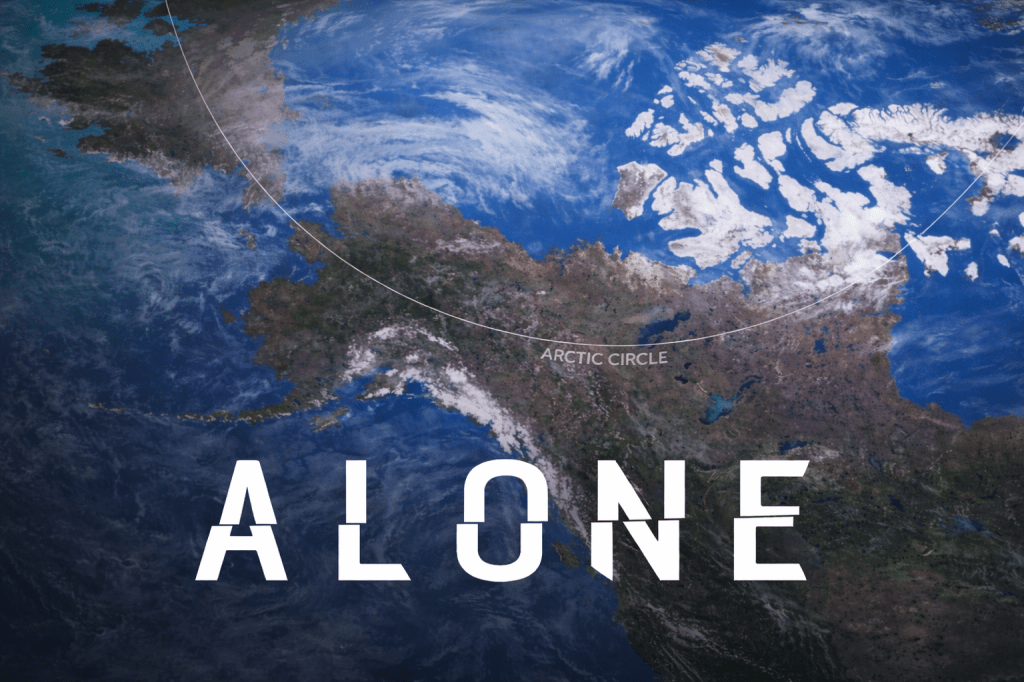
And as the title promises—they are alone.
Well, except for the wolves, grizzly bears, and moose.
Survival is reduced to three things: shelter, water, and protein.
Some contestants build elaborate log huts.
Others engineer impressive water filtration systems.
But the ones who don’t secure protein fade by Day 5.
Boletes (a new term for me!) and berries only take you so far.
Life becomes binary: Can you hunt successfully, or not?
The show has a term for the first few days after contestants land in the wilderness and face this reality: Drop shock.
It’s the psychological jolt of sudden isolation.
No schedules.
No safety net.
No cereal.
What started as an adventure is now something else entirely.
It’s survival.
Many LBM firms—and their sales teams—are still in post-COVID drop shock.
The market surge of 2020–2022 is long gone.
But the urgency to get back out and hunt is missing.
Too many sales reps and managers remain in observation mode: “Interest rates are up and starts are down, so, you know…”
Correct, but finish that sentence.
Referencing interest rates and housing starts is an excuse.
It happens to be true—but it’s still an excuse.
If we call ourselves the sales force, now is the time to prove it.
Too many companies are behaving like early-season contestants on Alone.
They’re building shelter.
Reorganizing territories.
Refining dashboards.
Holding meetings about other meetings.
None of those things are bad.
On Alone, of course you need shelter.
But shelter doesn’t win.
Protein wins.
Hunting wins.
You can’t cut your way to profitability.
You can’t RIF your way to growth.
Taking customers from competitors by delivering unique value matters more today than over-serving customers who formed the habit of buying from you years ago.
So here’s the leadership question: Are you making the need to hunt obvious?
If a sales rep earns the same commission maintaining an existing account as landing a new one—you’re not.
If you want a team that hunts, you need three things:
1. Redesign the comp plan to reward the hunt. Commissions on incremental net new gross profit must go up. Commissions on recurring revenue from existing customers buying the same categories must go down.
Sales reps won’t feel the urgency to hunt until they feel the cost of maintaining the status quo in their paychecks.
2. Make pipeline a requirement, not a suggestion.
If your reps don’t have quantified pipelines—with probabilities, confidence intervals, and dollar values—they’re not hunting. They’re hoping.
Hope isn’t a sales strategy.
It’s a coping mechanism.
3. Prioritize hunting on the calendar.
Hunting isn’t something to do when things slow down.
Things never slow down.
Intentional prospecting requires commitments from reps and coaching from managers—not good intentions and afternoons consumed by email.
At some point, you’ve got to go into the woods with a weapon and come back with food.
That tent never made a second appearance.
I didn’t grow up to be a camper.
But my father—an LBM hunter for four decades—did teach me something that night: It’s not about the tent.
It’s about what you do when you step outside it.
Comfort is easy.
Hunting is hard.
And in this market, shelter won’t save you.
Hunting will.
Thanks for reading.
I’ll see you back here next Thursday.
Subscribe here to get the next edition of The Craft of LBM Sales straight to your inbox—weekly stories and practical advice to master the craft of selling.
P.S. Don’t hunt alone.
If your team needs structure to get back into hunting mode, we’re currently offering the Weekly Game Plan—a 12-month time management program built specifically for LBM sales reps and sales managers.
It includes a complete time management system, online training, four physical notebooks, and live training with me every 60 days.
The cost is $497 for the full year.
The market may be softer, but you don’t have to fight it by yourself.
Copyright © 2026
Bradley Hartmann & Co.
All rights reserved.
Contact Bradley Hartmann:
bradley@bradleyhartmannandco.com
 The Craft of LBM Sales