

The Sales Fundamentals Workshop is our Super Bowl. Every April in Fort Worth, Hartmann & Co. hosts two days of the most engaging, interactive, and entertaining LBM sales training on the planet.
(Yes—it’s included in our 12-month OSR Academy.)
What makes it truly different? Real builders join us on stage. Attendees hear unfiltered feedback from the builders your team serves but never hear the candid truth from.
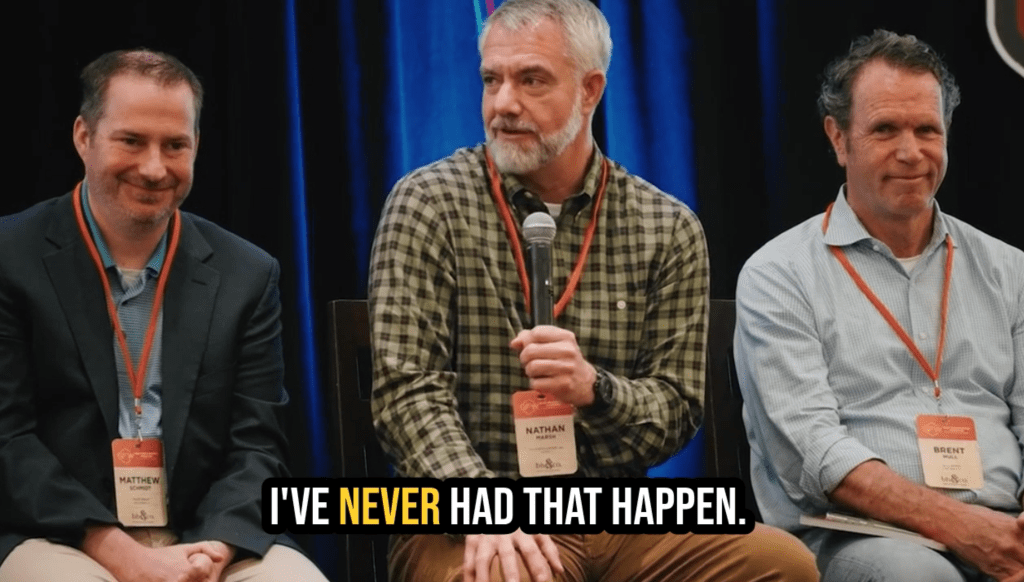
Last April, on stage at the Omni in Fort Worth, Nathan Marsh—the “M” in V&M Development out of Chicago—shared something that knocked me back a bit.
So much so I asked him to repeat it.
Me: Say that again.
Nathan: This has never happened to me.
Me: What?
Nathan: Somebody comes out to the job site, right? They walk it, find extra material, they’ve already got another delivery coming out for another building, and they send the guys over to pick up the extra material and call me and say, “Hey, we picked up this extra material, you’re gonna see a credit.” Or email me the credit invoice. It’s like, Holy cow! because that’s never happened. And it’s not so much the actual monetary amount, it’s just that it happened.
I turned to the 100 sales leaders in the room and said, “Are you catching this?”
A builder who’s helped construct over 3,000 homes had neverhad a supplier proactively collect extra material, issue a credit, and communicate it clearly.
Surprising? Yes.
But should it be?
The Builder’s Perspective: Two Big Problems
- Extra material = job site chaos.
It looks messy, adds safety risk, and plants doubts in homeowners’ minds.
- Extra material = lost money.
Builders paid for it. Unless the supplier sets clear expectations, they assume they’ll get money back if it’s returned.
The Supplier’s Perspective: Two Big Costs
- Pickup isn’t free.
Even if the truck’s nearby, time and effort are required to collect, inspect, unload, and restock. (Don’t even get me started on picking up special orders. That’s a worst practice.)
- The credit process costs, too.
Processing the paperwork and refunding the money impacts cash flow.
The OSR’s Dilemma: 8 Moments of Truth
Will the OSR . . .
- Notice the extra material?
- Schedule the pickup?
- Confirm it actually happens?
- Inspect the returned material?
- Manage the credit?
- Investigate why it happened?
- Adjust future takeoffs or contracts?
- Communicate all of this to the builder?
This is real work. And it’s more complicated than the builder thinking: “You’re already here. Just pick it up, restock it, refund me, and resell it.”
(And to the sales reps who duck the hard conversation with builders and lob it over the fence to Ops—you know who you are.)
Why This Rarely Happens — and When It Does
Nathan Marsh was stunned because it’s so rare.
Then Brent Hull took the mic—custom builder, historic preservationist, 100-year window manufacturer, and author—and said:
We’re very loyal. We’ve been using the same lumber yard for 30 years. And so those relationships are really important . . . It’s interesting, we actually do get credits back on our lumber and it’s pretty common for us to have that happen. So just the juxtaposition between the different building types and expectations is interesting to me.
What’s the difference?
Expectations.
Setting expectations requires thoughtful coaching, clear processes, and intelligent execution. All things that force us to slow down in such a busy world.
What If the OSR Said This?
“Mr. Builder, before we start, I want to be clear: We’ll help you maintain a safe, organized job site. That includes proactively picking up extra material. If it’s reusable, we’ll issue a credit. And I’ll lead quarterly material reviews to adjust takeoffs, if needed. Sound fair?”
That’s how a transactional supplier turns into a strategic partner.
There’s two this week!
- Listen to the full expert builder panel from April’s workshop. We dropped it Tuesday on the Construction Leadership Podcast. Click here to listen. Then hit subscribe.
- Over the next 30 days, find one opportunity to proactively pick up extra material for your best customer. Revisit the 8 questions above. Communicate every step. Then email us—tell us what happened and what you learned.
Nathan Marsh showed us the bar is low.
Brent Hull showed us it can be done.
Now it’s your turn. Raise the standard and earn loyalty through the craft of material management.

Subscribe here to get the next edition of The Craft of LBM Sales straight to your inbox—weekly stories and practical advice to master the craft of selling.
Copyright © 2025
Bradley Hartmann & Co.
All rights reserved.

Contact Bradley Hartmann:
bradley@bradleyhartmannandco.com
 The Craft of LBM Sales